The Importance of Discussing Real-Time, Accurate Data
Opening Story
Think back to the old way of progress monitoring. We would assess our students in early September. It took weeks to compile the data. By the time teachers sat down in late October to discuss the results in their Professional Learning Communities (PLCs), the data was already a month old.
We were making instructional decisions based on a ghost of who that student was four weeks prior. I call this "autopsy data"—it tells you what happened in the past, but it doesn't give you the pulse of what is happening right now in your classroom.
If we want to close the literacy gap, we can no longer afford to teach in the rearview mirror. Our teachers need a real-time GPS.
Leadership Lens
For instructional leaders, the continuous learning loop of assessing, tutoring, and instructing relies entirely on the speed and accuracy of information. When teachers have access to real-time data, they are empowered to make immediate instructional pivots.
But this cannot come at the cost of the teacher's time or the student's safety. At Amira, our mission is to give teachers their time back, securely and responsibly. The goal is not more screen time. It is to build confident, motivated, and masterful readers who can close their laptops, walk over to that beautifully organized classroom library, and get lost in a real book. We know that a safe environment is a prerequisite for learning, which is why student safety is our top priority and also why we built the Amira Trust Center. When districts maintain control of their data, teachers can confidently focus on using those real-time insights to drive their daily instruction.
Research and Evidence
The beauty of Amira is that the tutoring is the formative assessment. Every time a student completes their daily reading routine, Amira’s AI is conducting a highly accurate, micro-assessment of their skills.
This means that when a teacher sits down for a PLC or a planning period, they are looking at data from yesterday, not last month. They know exactly which students struggled with consonant digraphs that morning and who needs to be pulled for a small-group intervention that afternoon.
This real-time accuracy is precisely why Amira is so effective. The Louisiana ESSA Level II Study (2023–24)—an independent evaluation of nearly 80,000 K–5 students conducted by Instructure—didn't just show statistically significant higher literacy outcomes for Amira users; it demonstrated what happens when instruction and tutoring are perfectly aligned to a student’s immediate needs. Real-time data eliminates the guesswork, allowing teachers to maximize every single minute of their literacy block.
One Thing You Can Do Tomorrow
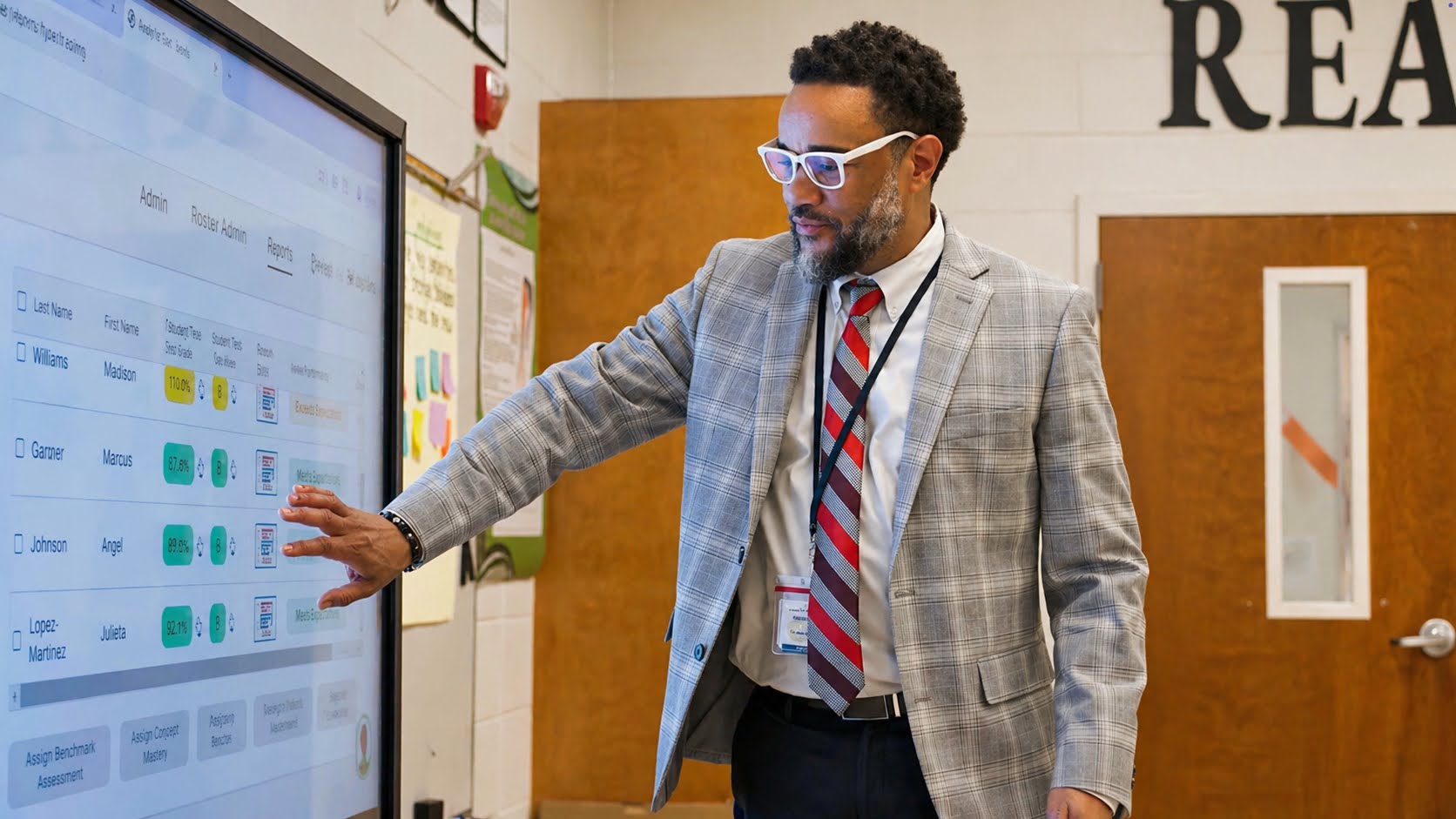
Transform your next PLC from a data review into an action planning session. Tomorrow, ask your instructional coaches to pull up the Amira dashboard during their teacher meetings. Don't look at the beginning-of-year baseline. Look at the data from the last 48 hours. Ask the team: "Based on what we learned yesterday, how are we adjusting our small groups for tomorrow?"
Looking Ahead
As we head into November, we will look closer at the students who often slip through the cracks. Join us for next month's theme, Growing Together, kicking off with our flagship post, "The Growth We Almost Miss," where we will discuss how subpopulation growth must become our primary strategy.