Early Detection | Reading Risk Screener
Amira Accurately Screens for Dyslexia Risk and Guides What Comes Next
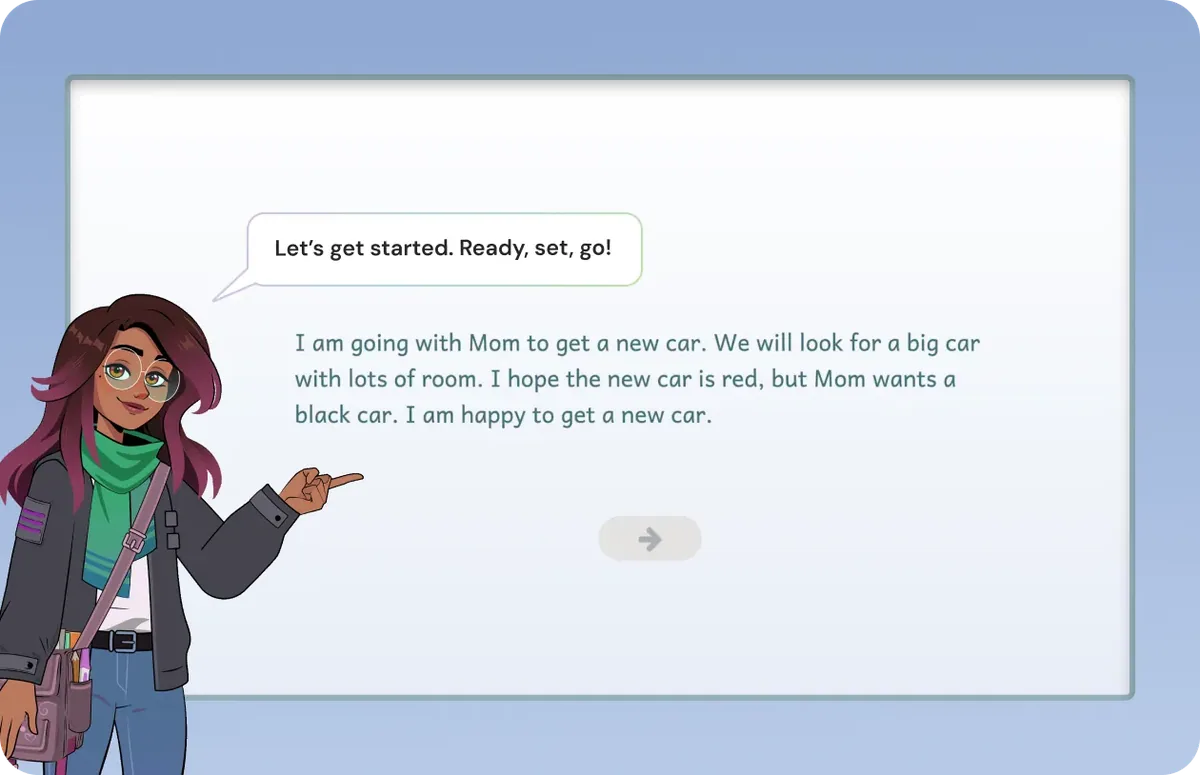
Amira listens as students read aloud, capturing the critical cognitive and linguistic markers of dyslexia. Informed by decades of neuroscience research, Amira provides validated, state-approved risk indicators and next steps to guide timely instruction and intervention.
A Theoretical Framework Rooted in Science
The Solution
Amira’s dyslexia and reading risk screener is built on three foundational pillars of research, leveraging the pragmatic research of the International Dyslexia Association and other leading organizations to identify constructs with proven value as signals of reading struggle.
International Dyslexia Association
Amira’s screener fully reflects the IDA’s recommendations for dyslexia screening, covering the most predictive constructs of reading struggle.
- Assesses cognitive efficiency through RAN, phonological memory, and letter naming, strong predictors of dyslexia and fluency.
- “Measures decoding foundations including phonological awareness, letter-sound association, and orthographic processing.
- Evaluates outcomes with word recognition, fluency, vocabulary, and comprehension, indicators of risk and long-term growth.
The Multiple Deficit Model (Francis, Fletcher, Pennington)
Amira reflects the reality that dyslexia rarely arises from a single deficit, it emerges from interacting factors across phonology, working memory, orthography, and processing speed.
- Acknowledges that dyslexia emerges from interacting factors across phonology, working memory, orthography, and processing speed, rarely from a single deficit.
- Assesses phonological processes including awareness, memory, and nonword repetition, the strongest contributors to reading risk.
- Measures processing efficiency (RAN, visual attention) and higher-order reading skills (orthographic processing, fluency, comprehension) to capture how multiple deficits combine to affect reading.

Duke’s Active View of Reading
Amira applies Duke’s Active View, which frames reading as an active, multifaceted process that integrates word recognition, language comprehension, and executive functions.
- Assesses self-regulation processes, visual attention, rapid naming, and working memory, that support the brain’s control of reading.
- Measures word recognition skills such as phonemic awareness, letter-sound fluency, and decoding that anchor early reading development.
- Evaluates bridging processes with oral reading fluency, vocabulary, and comprehension to connect decoding with meaning-making.
Amira Listens, Models Reading Development, and Identifies Cognitive Risk Indicators.
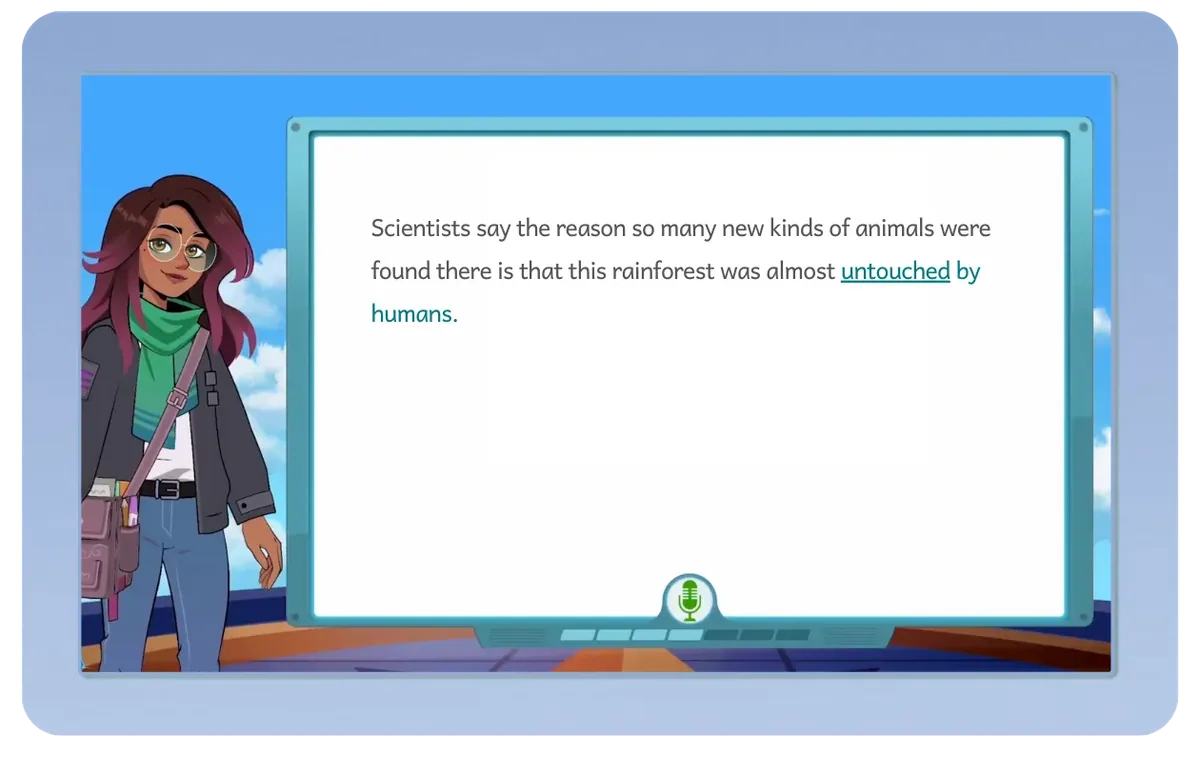
Amira analyzes oral reading in real time, using AI to model cognitive functions involved in skilled reading. These indicators are grounded in neuroscience and the Science of Reading, enabling Amira to flag students who may be at risk for dyslexia with higher sensitivity and specificity.
Neuroscience-Informed Skill Assessment
- Anchored in Scarborough’s Reading Rope and Duke’s Active View of Reading
- Captures 10x more measurement points than traditional screeners
- Measures cognitive-linguistic processes through authentic oral reading
- Adapts dynamically to each student’s performance
Validated Dyslexia Risk Screening
- Flags students using research-based indicators
- Screens full classrooms in under 20 minutes
- Achieves >0.8 sensitivity and specificity across diverse student populations
- Approved in 40+ states and top-rated by NCII for risk screening
Transparent, Unbiased Screening
- Applies consistent criteria across all students
- Eliminates scoring subjectivity with AI analysis of oral reading
- Provides clear visibility into the data behind every risk indicator
- Minimizes over-identification and missed cases through rigorous validation
Instructional Intelligence
- Growth Dashboard with actionable alerts
- Highlights stalled growth and skill mastery
- Suggests next steps mapped to standards
- Surfaces urgent needs for intervention
Curriculum-Connected Intervention
- Syncs with district curriculum and scope and sequence
- Connects screening to tiered intervention
- Generates skill-level IRIPs for each student
- Editable format for teachers and MTSS teams
Why Amira is Different
Unlike static or single-construct screeners, Amira:
Observes Oral Reading
Uses advanced speech recognition to capture oral reading fluency, miscues, and error patterns with precision.
Measures the Full Range of Risk Markers
From phoneme segmentation and nonword repetition to orthographic processing and comprehension.
Responds in Real Time
Leverages machine learning and Item Response Theory to ensure every student is challenged at the right level.
Delivers Actionable Next Steps
Teachers receive skill-specific diagnostics, auto-generated Individualized Reading Instruction Plans, and curriculum-connected next steps.
Reports That Turn Reading Risk Into Readiness
Amira’s reporting suite identifies and monitors dyslexia risk. Grounded in leading research frameworks, reports reveal why a student struggles and guide the next step for instruction and intervention.
Reading Risk Report
Provides a clear overview of students’ risk for reading difficulty, including dyslexia with data to guide early intervention, further testing, and additional support.
- District, school, class, and student-level views
- Drill-down to individual risk profiles
- Filters for language, grade, and test type
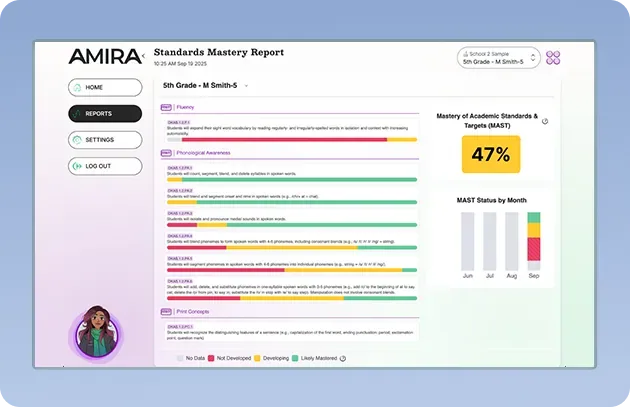
Assessment Classification Report
Shows how students perform across achievement tiers, including overall mastery and domain subscores. Helps identify students in need of intervention.
- Flexible tiering and cut-line options
- Benchmark and Progress Monitoring results
- District, school, class, and student-level reporting
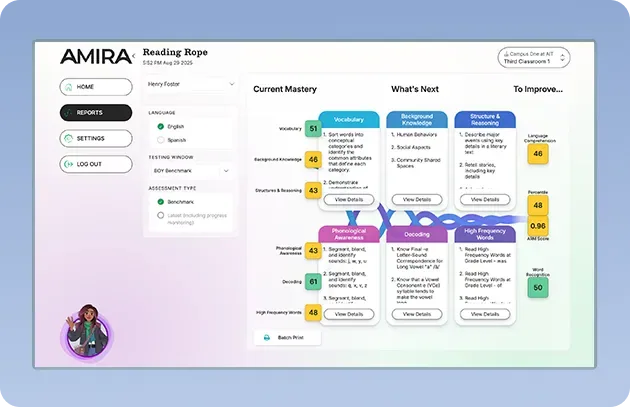
Science of Reading Program Analysis Report
Visualizes student proficiency across Scarborough’s Reading Rope strands, phonological awareness, decoding, vocabulary, background knowledge, and reasoning, giving a holistic view of literacy risk.
- Word recognition and comprehension strands scored
- Six Science of Reading dimensions tracked
- Identifies areas driving dyslexia risk
Validated by Leading Dyslexia Experts
Amira reflects the International Dyslexia Association’s screening guidelines and the Multiple Deficit Model, ensuring every risk marker is measured with scientific precision.
- For reliability and validityEarned through multiple independent psychometric reviews
- #1
- Sensitivity and SpecificityIn detecting early markers of dyslexia
- 95%+
- Core Domains AssessedFrom the Multiple Deficit Model for a full view of dyslexia risk
- 7
I love that Amira is truly differentiated to meet the needs of students for both remediation and enrichment. It has provided us Tier 1 and Tier 2 interventions for students and has given teachers specific diagnostic information within the reports that helps us inform instruction and fill reading gaps.
Frequently Asked Questions
One Suite, Every Step of Reading Growth
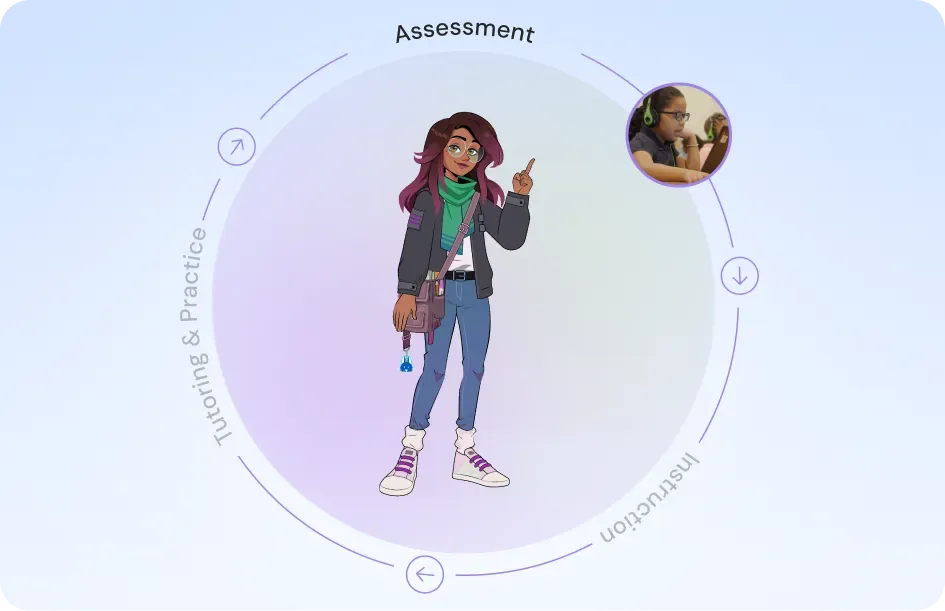
Amira is more than a dyslexia screener. Amira is a complete reading suite that supports every stage of literacy development. From early risk detection to coherent instruction and individualized practice.